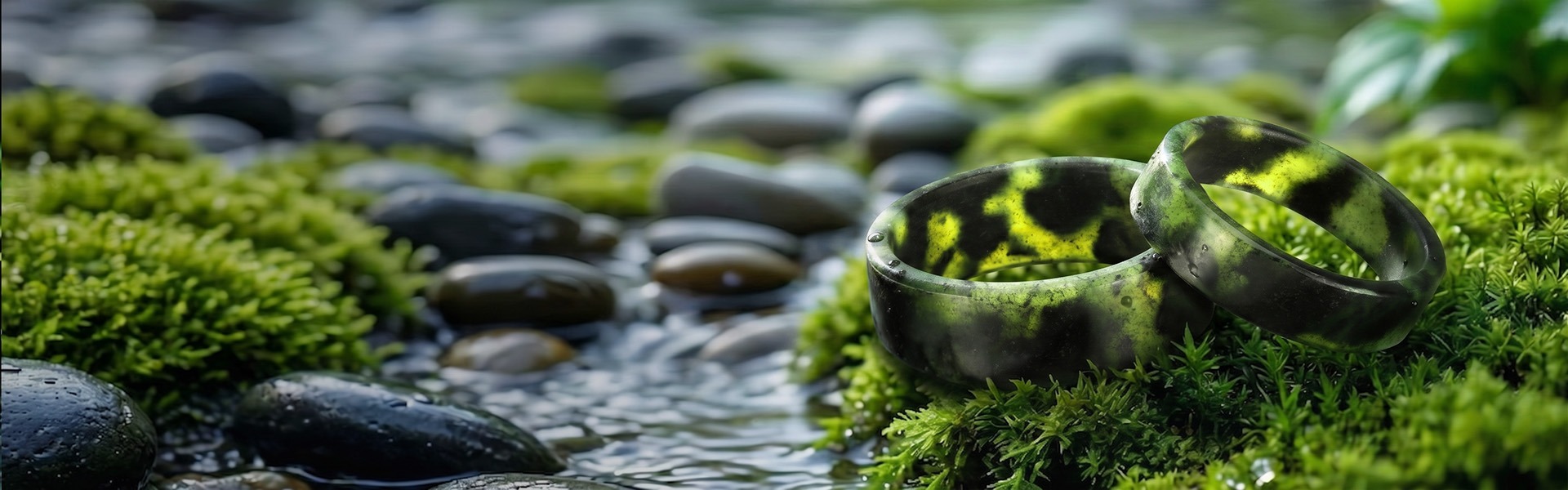
Black jade jewellery rings from Taiwan

The Black Jade stone · Discover the Material

Black to the eye, green in the light.

Discovered at the intersection of the Philippine Sea Plate and the Eurasian Plate, Taiwanese Black Jade is a newly classified kind of jade that embodies the raw energy of the Earth. Darker, denser, and more mysterious than any other jade in the world.
View collection

3.3M

YEARS IN FORMATION

7

DIFFERENT MINERALS

1

PLACE ON EARTH

The world of jade

A stone born from immense pressure

Of all minerals formed in the earth’s crust, two kinds of jade take the top spot in popularity: nephrite, composed of calcium and magnesium silicate, and jadeite, a sodium-aluminium silicate. Both are renowned for their extraordinary toughness – not their hardness, but their resistance to fracturing – which made jade one of humanity’s most prized materials for over 7,000 years.

Beyond these two, a third category – serpentine jade – exists in certain rare geological environments. Taiwanese black jade stone belongs to this rarer family, primarily composed of antigorite, a serpentine mineral formed under conditions found nowhere else on the planet.

black jade stone pattern

most popular jade mineral types

Years jade has
accompanied humankind

Black Jade stone from Taiwan was officially classified

Taiwan’s Geological Story

Where tectonic worlds collide

Taiwan sits at the boundary of the Philippine Sea Plate and the Eurasian Plate  one of the most geologically active zones on Earth. Frequent earthquakes and volcanic pressure have shaped the island’s dramatic landscape of steep mountains and plunging coastlines for millions of years.

This intense geological activity is precisely what created conditions for extraordinary mineral formation. At depths of extreme heat and pressure, ultramafic rocks reacted with water through a process known as serpentinization – transforming peridotite into serpentine minerals and, in this unique case, into what we now call Taiwanese Black Jade.

The primary deposits are found in the Hualien region, along Taiwan’s eastern rift valley – a direct product of the plate collision that built the island itself.

Visual Identity

Black at first glance,
green in the light

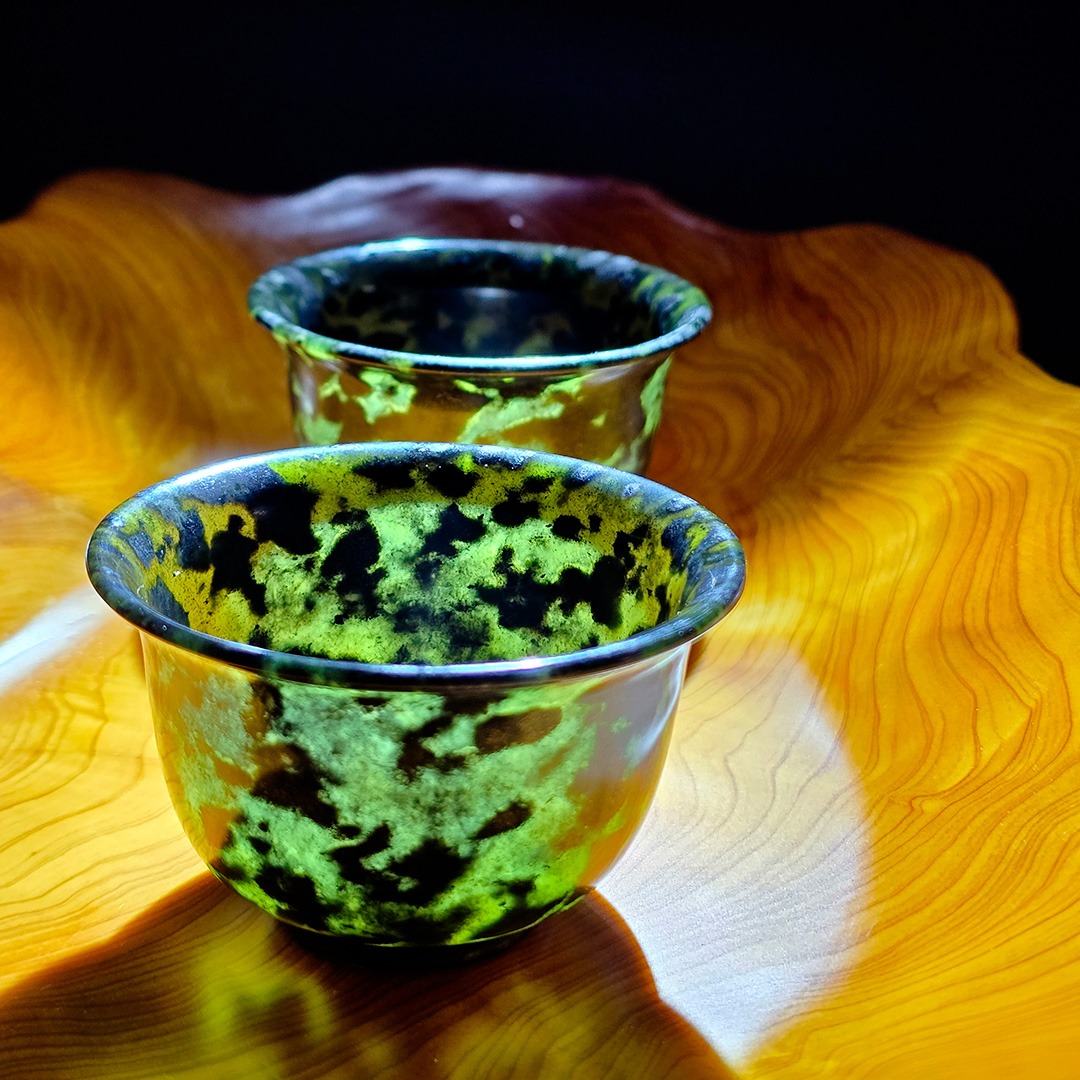
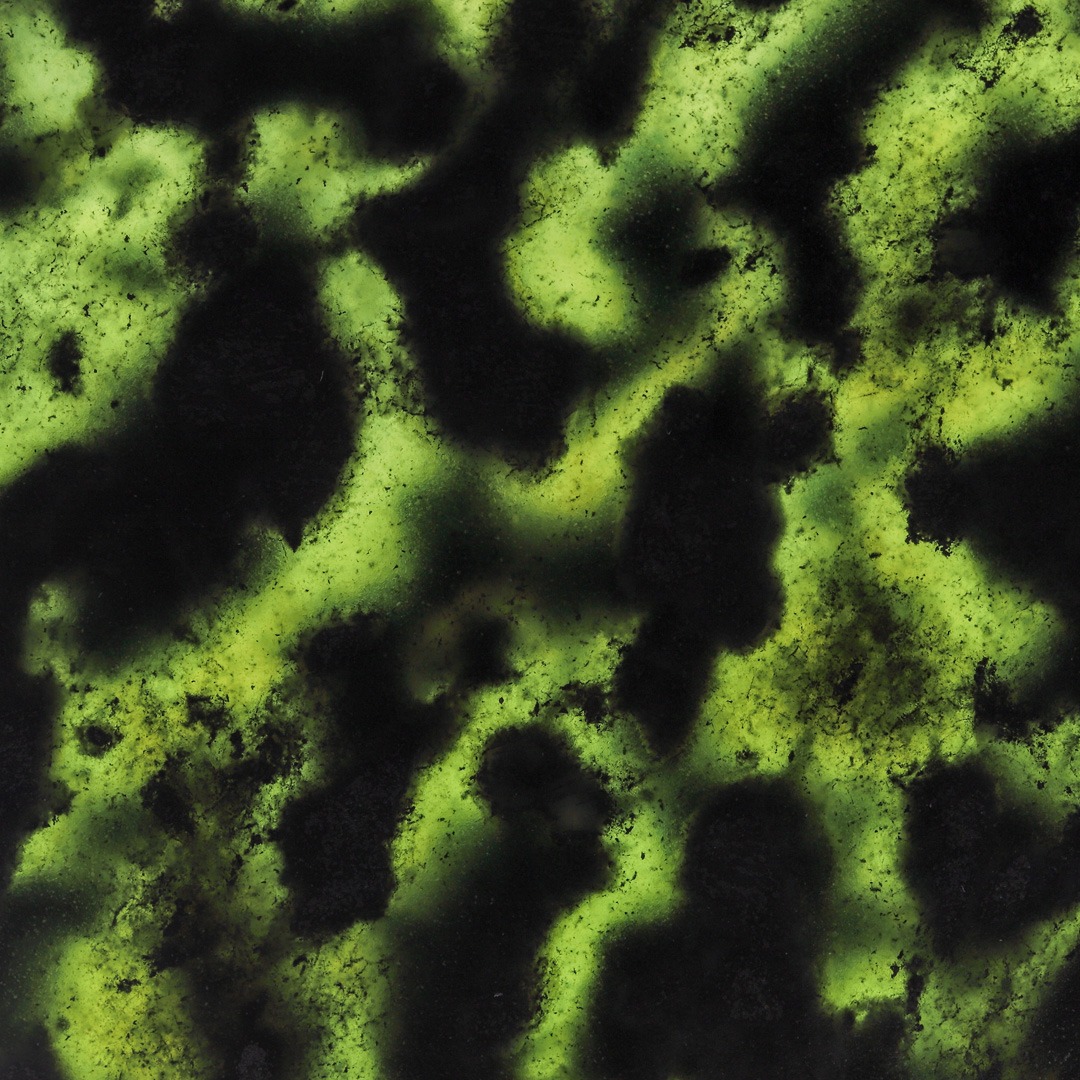
Taiwan Black Jade’s most striking quality is its visual duality. Under ambient light it presents as a deep, calm black. But direct or strong light reveals an inner world of greens, olives, and yellow-green tones, shifting with every movement and angle. No two pieces are alike.

alishan black jade tea cups on hinoki wood

Light vs Dark

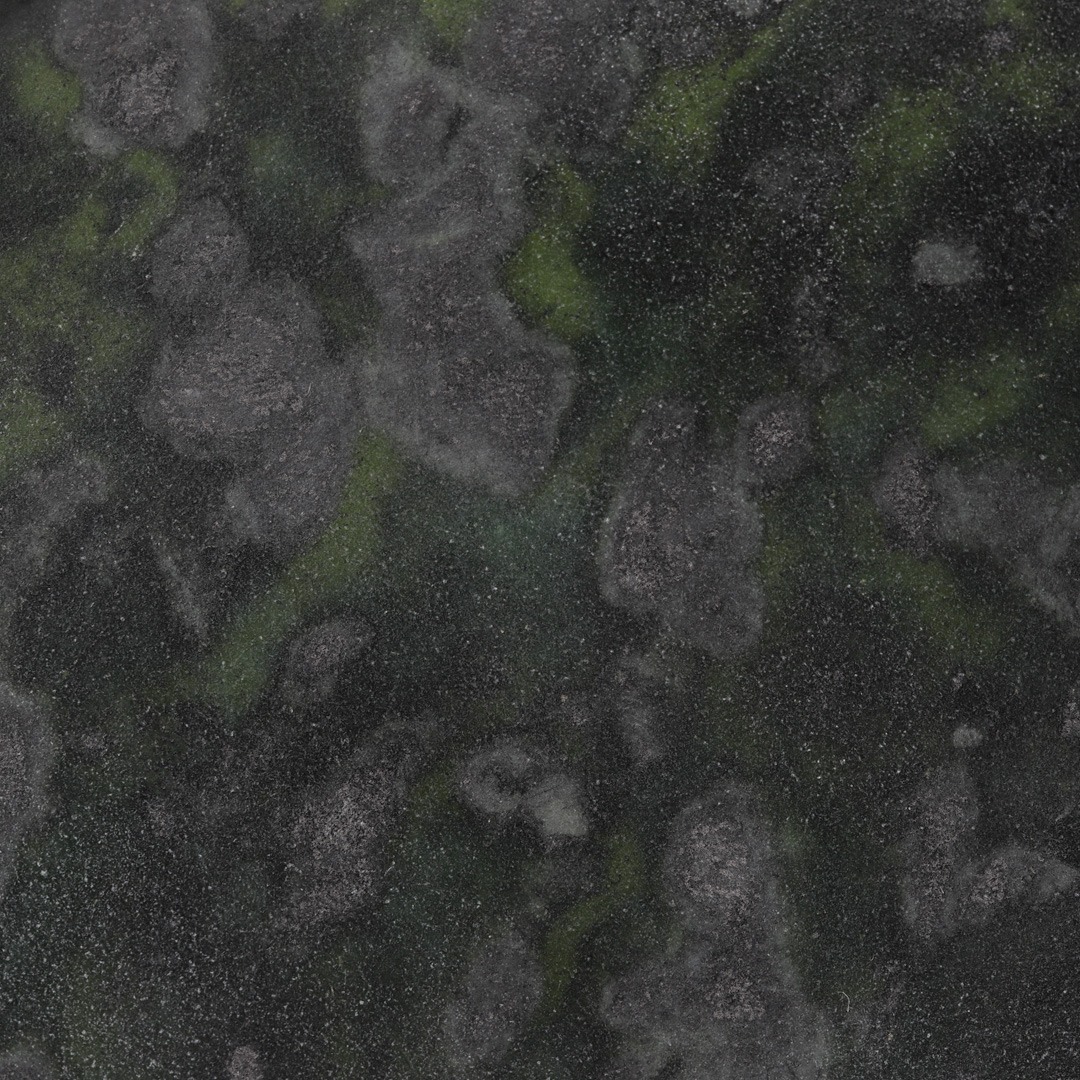
black jade stone pattern

Patterns & Powder

black jade stone pattern without light

“Black to the eye, green in the light, white in powder form.  A stone that reveals itself slowly, to those who pay attention.”

Taiwanese Black Jade stone · Discover the Material

Mineral Composition

A complex natural matrix

Our Black Jade stone belongs to the serpentine jade family, composed primarily of antigorite. Its chromite content is higher in aluminium and lower in chromium compared to serpentinite from other regions, making it mineralogically distinct and scientifically verifiable.

The presence of magnetite – iron oxide gives the stone its natural magnetic properties, while 7 different minerals contribute to its functional qualities valued across cultures.

Antigorite
Mg₃Si₂O₅(OH)₄
(Primary)

Magnetite
Fe₃O₄
(Primary – magnetic)

Chromite
 FeCr₂O₄
(Accessory)

Hematite
Fe₂O₃
(Accessory – metallic lustre)

Forsterite
(Mg,Fe)₂SiO₄
(Accessory)

Dolomite
CaMg(CO₃)₂
(Accessory)

Rarity & Investment Value

A finite resource

Since the 1980s, Taiwan has gradually ceased jade mining due to environmental protection policies and the rising cost of extraction. Today, all mining of jade in Taiwan is strictly prohibited by law.

Every piece of black jade stone in existence comes either from reserves already extracted or from finds that rivers bring down from the mountains. As demand grows, availability can only decrease. The stone is not simply beautiful. It is finite.

1980s – mining phaseout begins: Environmental policy and extraction costs drive Taiwan to reduce jade mining operations.
100% mining ban today: All jade mining in Taiwan is now strictly prohibited. No new supply will ever enter the market.
15yrs since reclassification: Only rediscovered and classified in 2010 – the stone’s true value is being recognised worldwide.
∞ growing rarity: With no new supply and rising awareness, Taiwanese Black Jade’s collectible and investment value can only grow.

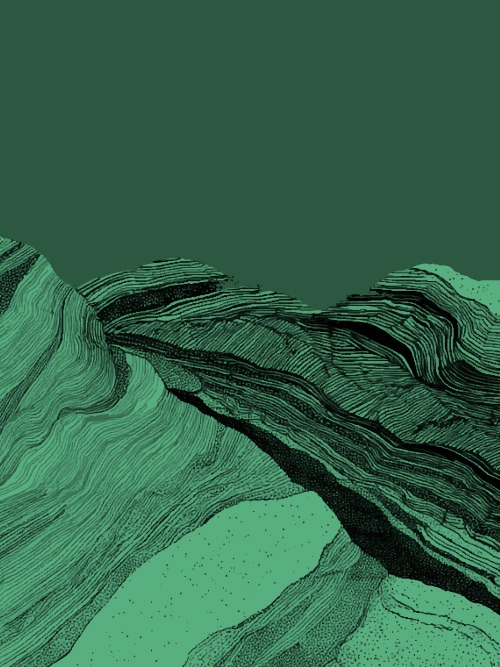
Alishan mountain range in Taiwan

Craftsmanship

Where nature meets minimalism

Shaping black jade stones demands more than technical skill – it demands patience. Unlike metal, stone cannot be bent, cast, or corrected. Every cut is a commitment. The process begins before a single tool is picked up. Each raw stone is assessed for its grain, mineral distribution, and internal light. Only then does the grinding begin – progressing through increasingly fine abrasive compounds until the surface yields its characteristic soft glow. During the wet grinding process, alkaline minerals within the stone – including magnetite and antigorite – dissolve fractionally into the cooling water, measurably raising its pH. The final polish is done entirely by hand. No machine replicates it. What looks like a flaw in the raw stone – a dark inclusion, an irregular pattern – is, in the artisan’s eye, the piece’s identity. We do not remove these signatures. We polish around them.


Conclusion

Not about brilliance. About depth.

Formed over millions of years and rediscovered through modern science, it represents a unique fusion of geology, culture, and refined aesthetics. For those who value authenticity, balance, and understated elegance, it offers more than beauty – it offers meaning.

Get in contact Visit our collection