


Golden scars – the art of Kintsugi
Oct
We all know the stomach-dropping feeling. A sudden slip, a sharp sound against a hard floor, and a beloved object is broken into pieces. In Western culture, our immediate instinct is often to throw it away, or to try and hide the damage with clear glue, pretending the mishap never happened. But there is a much wiser, more gentle way to look at fractures – one that transforms a moment of heartbreak into a celebration of history.
The beauty of the fracture
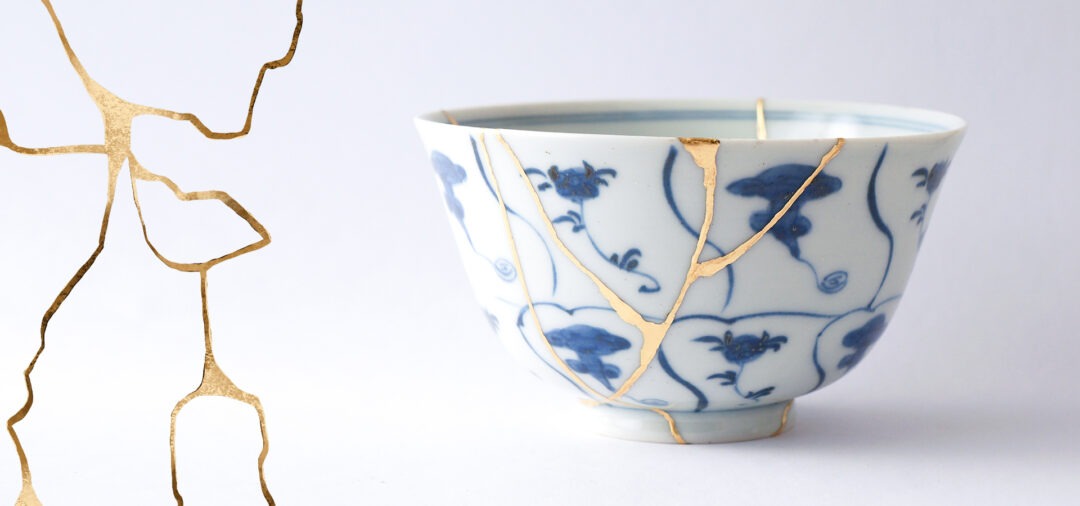
Instead of hiding a break, a centuries-old Japanese tradition does something entirely different: it highlights the damage. Known globally as a profound form of kintsugi art, this method involves carefully rejoining broken fragments using a natural lacquer dusted with genuine gold, silver, or platinum powder. Instead of rendering the crack invisible, the artisan turns it into the most eye-catching feature of the object. The fracture lines are transformed into bright, radiant pathways of gold, ensuring that the piece becomes far more beautiful and valuable than it ever was before the accident.

Looking closer: The philosophy behind the craft
To truly appreciate this practice, one must look past the physical technique and explore its soulful background. The deeper kintsugi meaning is intimately rooted in Wabi-Sabi – the ancient Japanese philosophy of finding peace in imperfection, transience, and the natural cycle of life.
Wabi-Sabi teaches us that nothing lasts, nothing is finished, and nothing is perfect. Rather than viewing a crack as a fatal flaw that ruins an item, Kintsugi treats the fracture as an honest, proud chapter of the object’s story. It reminds us that there is a unique dignity in objects that have suffered damage and carry a history.
This philosophy serves as a comforting metaphor for our own lives. Our personal challenges, emotional heartbreaks, and life experiences don’t make us “damaged goods.” Just like a repaired ceramic vase, our personal scars can be filled with resilience, strength, and wisdom, transforming us into more intricate, beautiful, and authentic individuals.
A striking alliance: Golden seams on black jade
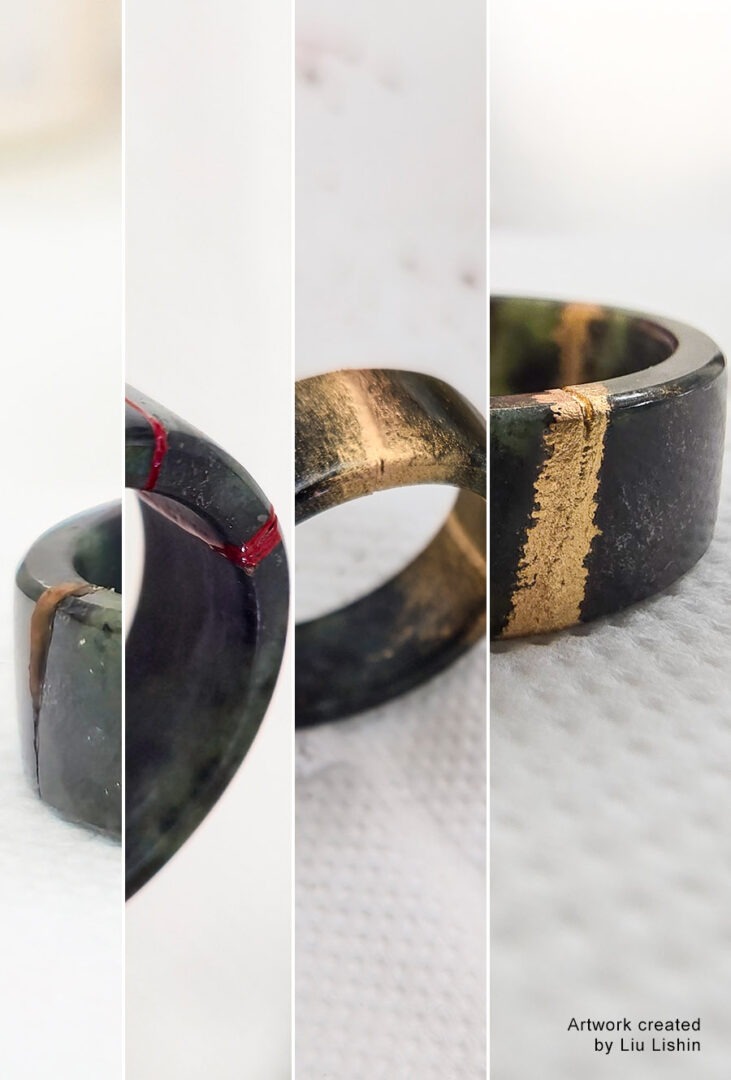
While traditionally practiced on ceramics and pottery, this philosophy creates a breathtaking visual harmony when applied to natural gemstones – specifically, authentic Taiwanese black jade. As a living material forged deep within the earth over millions of years, black jade naturally adapts to you; by absorbing your skin’s natural oils, it becomes increasingly translucent and highlights its classic “oily luster” over time. Because it is a genuine mineral matrix composed of both hard and soft layers, a heavy accidental impact can sometimes cause a clean break.
When you apply our Kintsugi Alterier kit to a black jade ring, tea mug or necklace, something magical happens. The brilliant, glowing gold lines map out a striking contrast against the dark, mysterious depths of the stone. The piece transitions from a minimalist luxury item into an absolute masterpiece of personal storytelling. It becomes a wearable symbol of survival, strength, and rebirth.
A mindful DIY ritual for your home
Repairing a broken treasure doesn’t have to be a complicated task left only to distant master artisans. In fact, fixing an item yourself can become a deeply calming, meditative ritual. By slowing down your thoughts, carefully mixing the materials, and intentionally tracing the lines of a fracture, you practice patience, focus, and ultimate care.
For those of you who want to experience this process and want to mend something broken, we have introduced a high-quality kintsugi set to our shop collection. It contains all the safe, premium materials you need to fix a cherished piece of black jade, a favorite coffee mug, or a broken family heirloom. By choosing to restore instead of replacing, you give your broken treasures a beautiful second life – creating an entirely unique piece that shines brighter because of its history.
Shop Kintsugi set